If your packaging line stops, so does your output. One common cause is a vacuum pump that was never quite right for the job. It might be too small for the machine, unsuited to the moisture in your process, or hard to service when something goes wrong. These problems rarely show up at purchase. They show up months later, as slow cycles, repeat callouts and lost production time.
This guide explains, in plain terms, what to consider before you buy a vacuum pump for packaging equipment, using the Becker U 5.65 (XL K) as an example.
You do not need an engineering background. You only need to know what to ask.
What the pump does for your packaging line
A vacuum pump removes air from a chamber or package so that a machine can seal, hold or process product properly. If the pump is too slow or struggles under load, the whole machine waits for it.
The Becker U series is a range of oil-lubricated rotary vane vacuum pumps. Becker lists them for machines such as tray sealers, chamber machines and tumblers. The U 5.65 is one of the smaller models in the range, so it is a useful example of how a pump should be matched to a machine.
Start with your machine, not the pump
The most important step is to describe your machine and process before you look at pump specifications. A good supplier will want to know:
- The make and model of your packaging machine
- How quickly you need each cycle to finish
- How much vacuum your product and packaging require
- Whether your process releases moisture or steam
With that information, the supplier can confirm whether a pump is the right size. The U 5.65 moves 65 cubic metres of air per hour on a 50 Hz supply, which is the standard in Australia. Whether that suits your line depends on the size of your chamber and the speed you need. Choosing a pump based on the headline number alone is how many businesses end up with the wrong one.
Moisture is easy to overlook
Food and packaging processes often release moisture during vacuum. In an oil-lubricated pump, too much moisture can affect performance if it is not managed. The U 5.65 range includes a gas ballast valve, which is designed for this situation, and the data sheet lists limits for how much water vapour each version can handle.
The takeaway for a business owner is simple. If your product is moist, tell your supplier early. It changes which version and accessories make sense.
Two versions, different strengths
The U 5.65 comes in two versions. The XL K has a larger oil tank and a built-in oil-air cooler, and it is listed for continuous operation across a wider pressure range. The standard U 5.65 is lighter and slightly quieter. Neither is better in every case. The right choice depends on how hard and how continuously the pump will work.
Think about servicing from day one
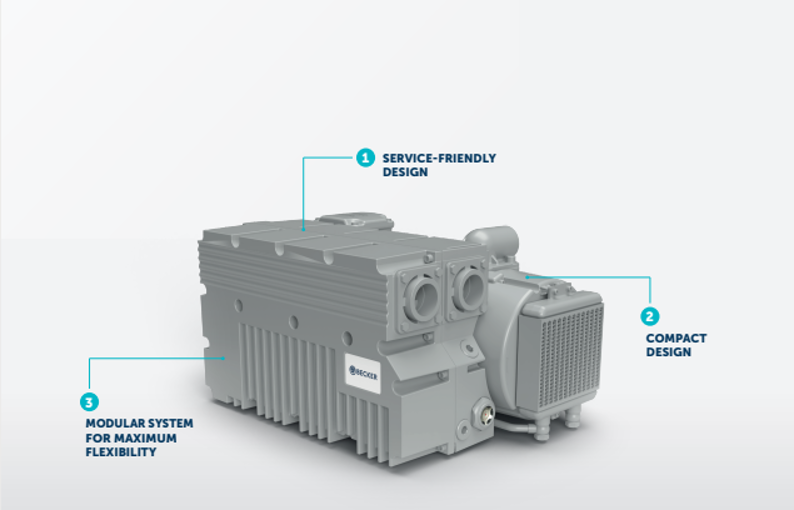
A pump that is easy to service helps you avoid long stoppages. Becker describes the U 5.65 as service-friendly, designed for easy maintenance on site. It has a visible oil level window, a simple oil drain and a vacuum connection that can be rotated to suit your machine layout. An optional indicator is also available to show when the oil separator needs attention.
Before you buy, ask your supplier what spare parts and oils you will need, how quickly they can be supplied and what servicing support is available. A pump is only as dependable as the parts and support behind it.
Look beyond the purchase price
The cheapest pump is not always the poor choice, and the most expensive is not always the best. What matters is whether the pump suits your machine and how it will perform over time. When comparing quotes, consider how long parts take to arrive, how often the pump needs servicing, and what a stopped line costs you per hour. Those figures often matter more than the difference in price.
Where to go from here
The best way to choose a pump is to process with a supplier who knows the range. Gather your machine details, your cycle requirements and any notes on moisture, then contact Becker Pumps Australia to confirm which version and accessories suit your application. Settling this before you buy can save you a lot of trouble later.
FAQs
What is the difference between the U 5.65 and the U 5.65 XL K pumps?
The XL K has a larger oil tank and an oil-air cooler. It is also a little heavier and listed for continuous operation across a wider pressure range. Your supplier can confirm which suits your machine.
How do I know if the pump is the right size?
It depends on your machine, chamber size and cycle time. Give your supplier these details and ask them to confirm the match against the pump’s performance data.
Does moisture in my product matter?
Yes. Moisture can affect an oil-lubricated pump, so mention it when you enquire. A gas ballast valve is part of the answer, and your supplier can explain how it applies to your process.
What should I ask before buying?
Ask about spare parts availability, oil requirements, servicing support and how the pump suits your specific machine, not only the price.